Baseball's World Series, 1947-1963: From Jackie to Sandy
Public Festivals in a Privatizing Society
Posts
Festivals
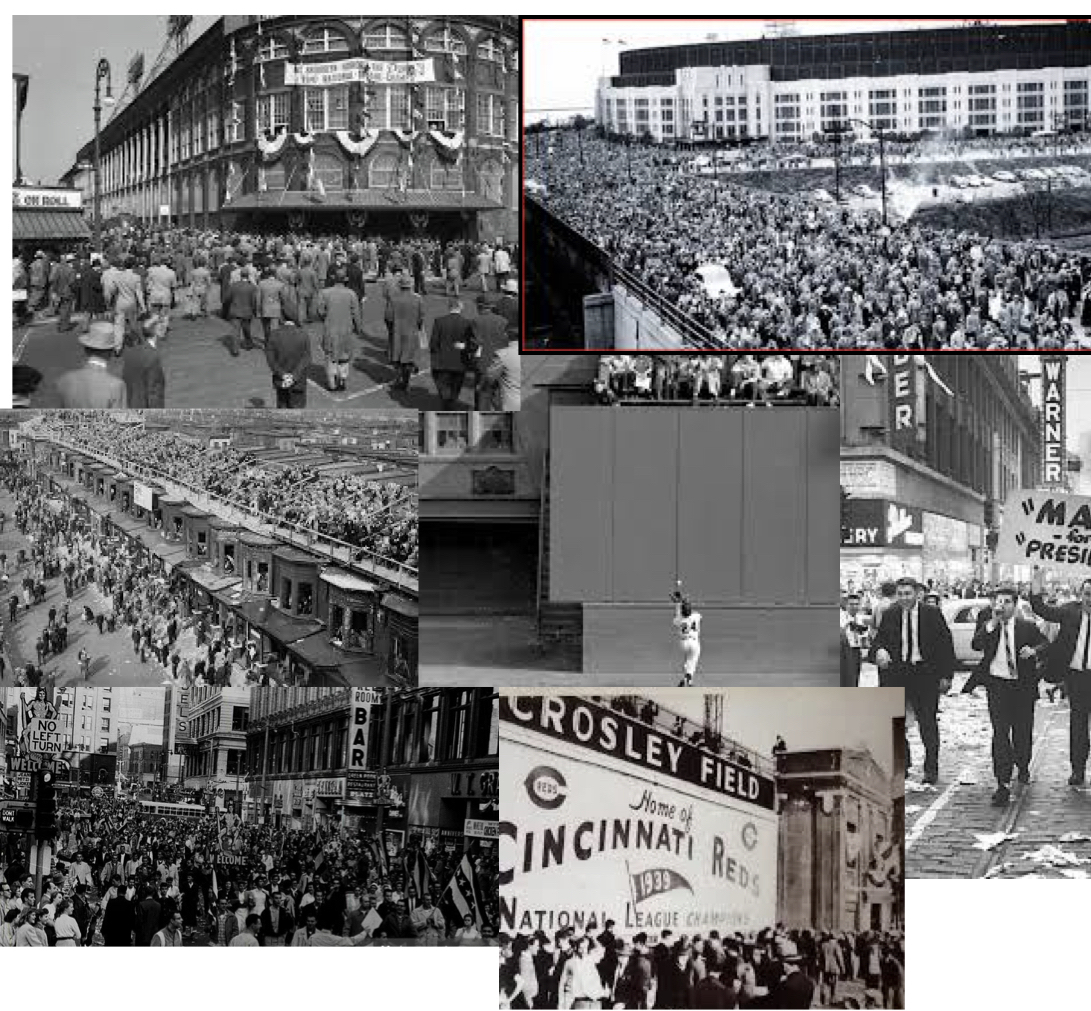
1949 Replay (in progress)
The Genesis of the Project: Two Answers
See the attached pdf (and the About page) for a better understanding of this project.
The Park in the City: Baseball Landscapes Civically Considered
This article might provide some additional insight into what I had in mind for this project. My dear friend from graduate school, Christopher Clarke, was editing a special issue of Material History Review and solicited this article from me. It was right at the end of the last century, at a low point in both my personal and professional life (I was battling an earlier health issue and hadn't done any significant writing in a year or more). This brought me out of the funk and set me off on a more promising path. Thanks Chris!!!
I'll also take this opportunity to say that the material under the Baseball History tab can also provide insight into the larger project I had in mind.
1947: A few slides about the historical World Series
The World Series in 1947 produced many memorable moments. Sam Miller ranked it as the 9th most interesting World Series of the 115 that he examined in 2018. Of course, Jackie Robinson's base running generated considerable comment, but in the end Italians made the biggest mark on the series. In game four, with the Yankees up two games to one, Yankee hurler, the journeyman Bill Bevins, took a no-hitter and a 2-1 lead (he'd walked ten), into the 9th, only to see the no-hitter and the game lost on pinch hitter Cookie Lavagetto's double to right. Then in game six, with the Dodgers up 8-5 and looking to tie the series at 3 games apiece, Joe DiMaggio hit a drive to deep left field with two runners on. Racing toward the foul line, defensive replacement Al Gionfriddo made a stabbing grab to end the inning and preserve the Dodger win.
Jackie Robinson related powerpoints (in pdf format)
Some repetition here and I should warn you that many of the links no longer work. I've left them in, mainly, both because I'm lazy and because leaving them in might lead some readers to explore on their own. Wonderful images and video out there.